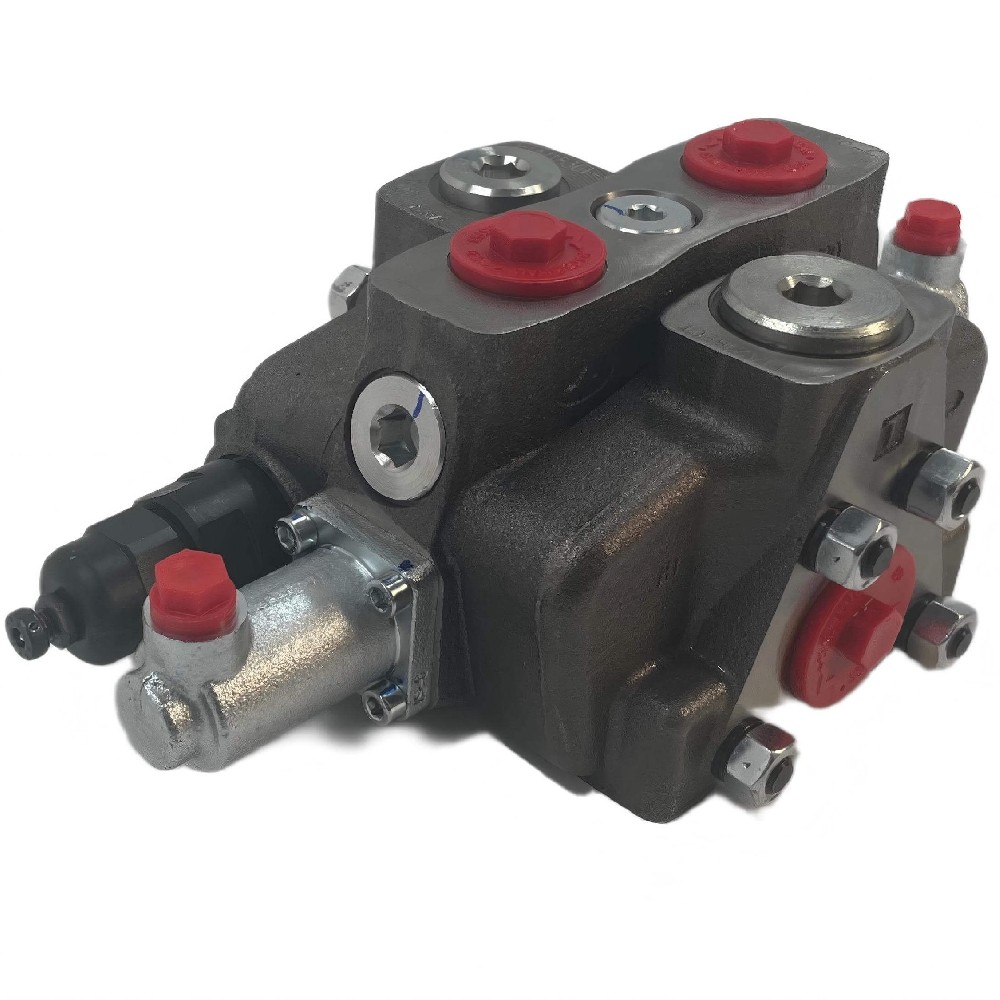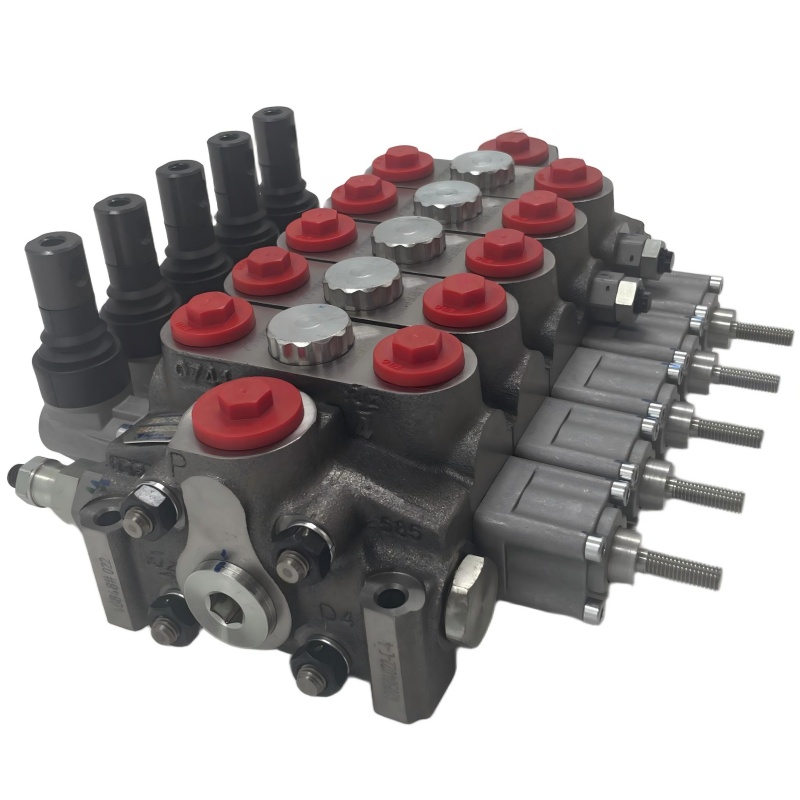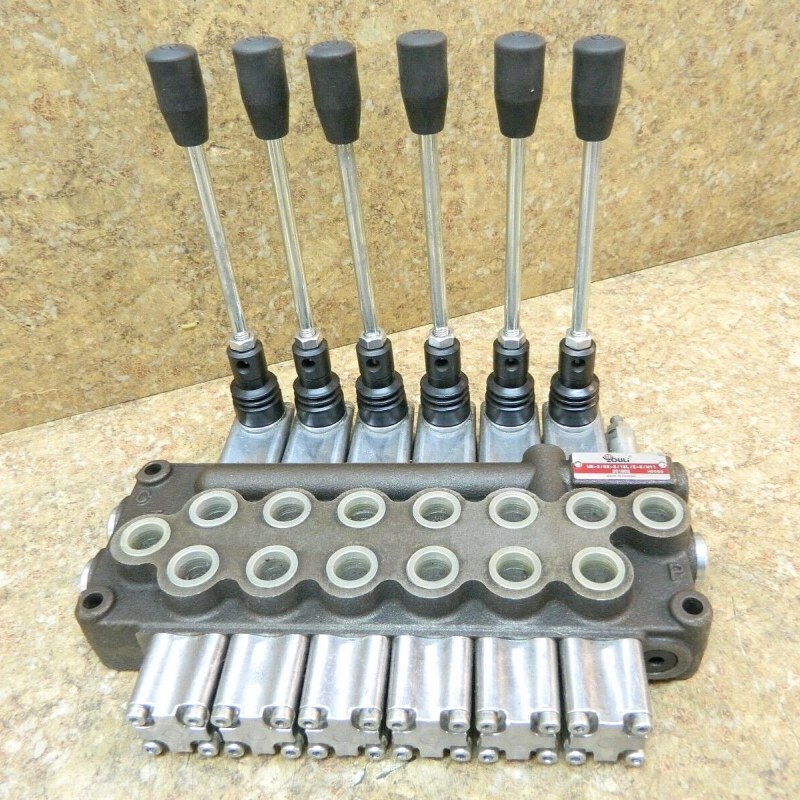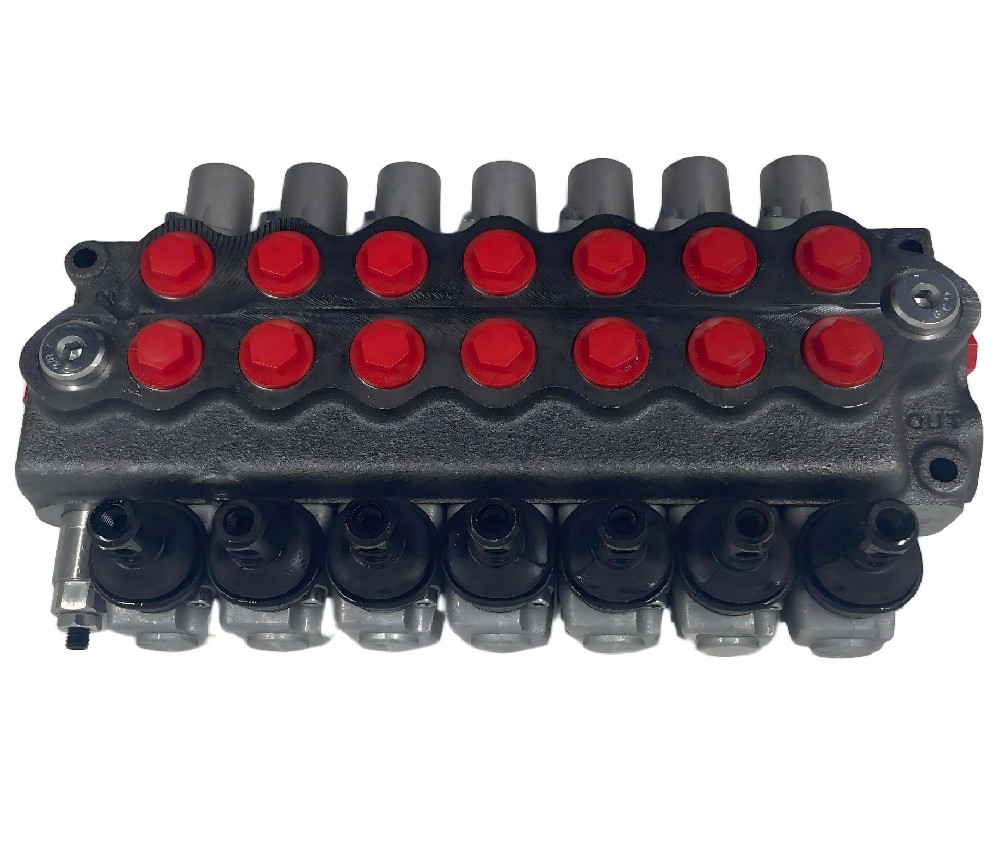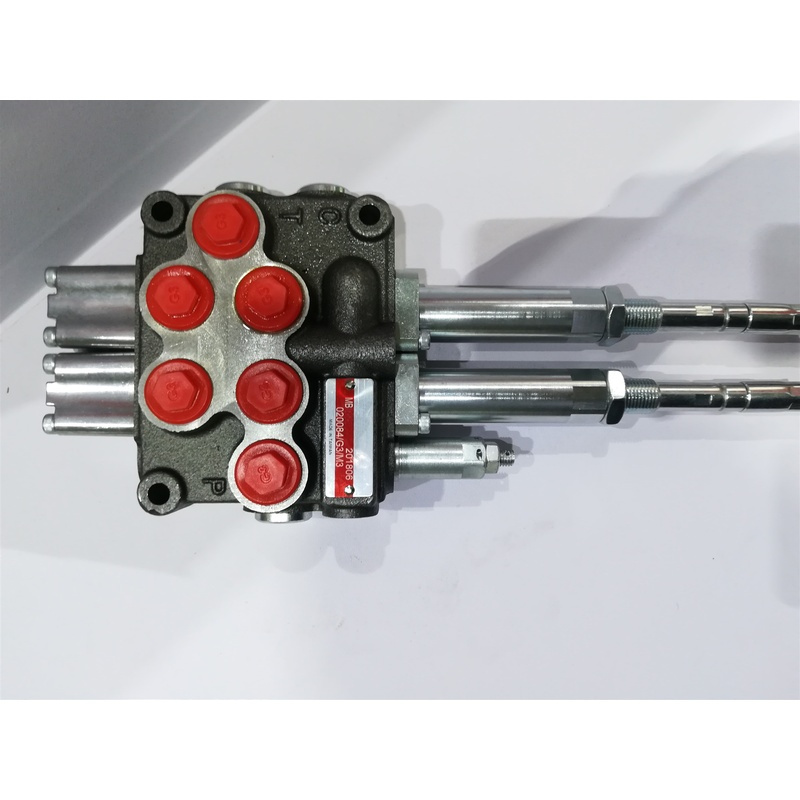
The Youli MB-3/3s stands as a quintessential example of a robust and purpose-driven manual hydraulic control valve.Precisely categorized as a directional control valve,this unit is engineered for applications where direct,reliable human operation is paramount over automated control.Its design centers on providing a dependable interface for an operator to manage hydraulic functions,making it a cornerstone component in a wide array of mobile and industrial equipment where simplicity,durability,and cost-effectiveness are critical.
Product Overview and Technical Positioning
The Youli MB-3/3s is a monoblock directional control valve,meaning its multiple valve sections are machined into a single,solid casting.This construction offers inherent strength and minimizes potential internal leakage points compared to modular,sectional designs.It is explicitly configured for manual operation,typically via a direct mechanical lever,granting the operator tactile control over the direction of hydraulic fluid flow to various actuators like cylinders or motors.
As a directional control valve,its core function is to alter the path of oil within a hydraulic circuit.By shifting the valve's internal spool,the operator can connect the pump's pressure port(P)to different work ports(A,B),while simultaneously directing return oil from other ports back to the tank(T).This action directly controls the extension,retraction,or stopping of hydraulic actuators.
Technical Characteristics and Design Features
The MB-3/3s embodies several key design philosophies tailored for harsh environments:
Monoblock Construction:The valve body is a single,high-strength casting.This design offers excellent resistance to deformation under high pressure and vibration,which is common in mobile machinery.It simplifies the external sealing scheme,as there are no joints between valve sections that could leak.
Manual Lever Actuation:Control is achieved through a direct mechanical linkage.This method is prized for its simplicity,immediate feedback,and fail-safe operation—it requires no electrical power or complex pilot systems to function.The valve typically features a spring-centering mechanism,ensuring it returns to a neutral safety position when the operator releases the lever.
Parallel Circuit Configuration:In a multi-spool valve like the MB-3/3s,the common pressure inlet is often connected in parallel to all valve sections.This allows the operator to actuate any function independently or simultaneously.However,when multiple functions are used at once,the available flow from the pump is divided,which can slow actuator speeds—a fundamental characteristic that operators learn to manage.
Built-in Pressure Relief:Most valves of this type integrate a main system relief valve within the monoblock.This critical safety component limits the maximum system pressure,protecting pumps,hoses,and actuators from damage due to overloading.
Porting and Sealing:It features standardized porting for hydraulic connections,often following common metric or SAE standards.Robust sealing materials are used to ensure longevity and compatibility with various hydraulic fluids.
Primary Applications and Use-Case Scenarios
The reliability and simplicity of the Youli MB-3/3s make it the valve of choice for numerous applications where electronic control is unnecessary or undesirable:
Mobile Machinery Outriggers and Stabilizers:A primary application is controlling the extension and retraction of outrigger legs on truck-mounted cranes,concrete pumpers,and aerial work platforms.The direct manual control provides the precise,feel-based operation needed for safe machine stabilization.
Agricultural and Forestry Equipment:It is widely used on tractors,loaders,and attachments for functions like loader arm control,grapple operation,or log splitter actuation.Its resistance to dust,moisture,and shock is essential in these fields.
Construction and Drilling Rigs:The valve finds use in compactors,drilling rigs,and other construction equipment for managing auxiliary functions where robust performance trumps automation.
Material Handling:Simple forklifts,deck cranes,and other handling equipment utilize these valves for reliable and durable lifting and positioning control.
Performance Advantages and Operational Value
Choosing the Youli MB-3/3s brings distinct advantages tailored to its operational niche:
Exceptional Durability and Long Service Life:The monoblock construction and manual actuation result in a valve with very few failure-prone components.There are no solenoids to burn out,no sensitive electronics to damage from water or vibration,leading to high mean time between failures(MTBF).
Intrinsic Safety and Fail-Safe Operation:The direct mechanical connection provides unambiguous control.In the event of a power failure on the machine,the hydraulic functions remain fully operable via the manual lever,which can be a critical safety feature.
Lower Total Cost of Ownership:Its simplicity translates to lower initial cost compared to proportional or solenoid valves.Furthermore,maintenance is straightforward,and its robustness reduces downtime and repair expenses over the long term.
Immediate Tactile Feedback:An experienced operator can"feel"the hydraulic system's response through the lever,allowing for nuanced control of actuator speed and force,which is difficult to replicate with electronic joysticks in some applications.
Expanded Perspective:The Role of Manual Valves in Modern Hydraulic Systems
In an era trending towards electrification and automation,the manual directional control valve retains a vital and irreplaceable position in fluid power.
1.Comparing Control Paradigms:Manual vs.Automated Valves
The choice between manual and electrically controlled valves(like solenoid or proportional valves)is a fundamental design decision based on application needs:
Manual Valves(e.g.,Youli MB-3/3s):Excel in environments demanding simplicity,reliability,and cost-effectiveness.They are ideal for machines with a limited number of functions,where an operator is always present,and where environmental conditions are too harsh for electronics.Their primary limitation is the lack of remote or automated control capability.
Solenoid-Operated Valves:Enable remote and automated control via electrical signals from switches or programmable logic controllers(PLCs).They are essential for complex,sequenced automation but introduce dependencies on electrical power and control systems,with potentially higher susceptibility to failure in dirty or wet environments.
Proportional Valves:Provide not just directional control but also infinitely variable control over flow and actuator speed via an analog electrical signal.They are used for precise motion control but are the most complex and expensive option.
Selection Insight:The Youli MB-3/3s is not an outdated technology but the optimal solution for a specific set of requirements.It is selected when the application values robustness,operator feel,and functional simplicity above remote control or automation.It represents the most direct and reliable mechanical link between human intention and hydraulic power.
2.Key Considerations for System Integration and Maintenance
Implementing a manual monoblock valve effectively requires attention to several practical aspects:
Ergonomics and Lever Placement:The valve must be positioned so the operating levers are within comfortable reach of the operator.The lever effort,stroke,and feel are crucial for operator fatigue and control precision.
Load-Holding and Safety:Unlike valves with built-in checks,a simple directional valve may not prevent a load from drifting if a hose fails.For vertical load-holding applications(like a raised crane outrigger),additional external components like pilot-operated check valves(often called"hydraulic locks")are often required in the circuit for safety.
Fluid Cleanliness:While highly tolerant,the precision-machined spools and bores still require adequately clean hydraulic fluid.Contamination can lead to spool sticking,increased wear,and internal leakage over time.A well-maintained filtration system is recommended.
Circuit Customization:The fixed nature of a monoblock means its functions(number of spools,type of center position)are determined at purchase.System designers must carefully plan current and future hydraulic needs when specifying the valve model.
Frequently Asked Questions(FAQs)
1.What does the"3/3"in the model number MB-3/3s signify?
This nomenclature is common in hydraulics.The first"3"typically indicates that the valve has three working positions(e.g.,forward,neutral,reverse).The second"3"often means each valve section has three primary ports(Pressure,Tank,and one Work port,common for double-acting cylinder control with a fourth port integrated internally)or refers to a specific spool type.The"s"may denote a special feature like a spring-center return.
2.Can this valve be used for applications requiring precise,slow movement of actuators?
Precise slow-speed control can be challenging with a standard manual valve.The flow rate is primarily governed by pump output and lever displacement.For more controlled speed,the hydraulic system would often incorporate separate flow control valves(needle valves or adjustable throttles)installed in the lines between the directional valve and the actuator to meter the flow independently of the lever position.
3.How does a monoblock design differ from a sectional or stackable valve design?
A monoblock valve is a single,solid casting containing all spools.It is compact,cost-effective for standard configurations,and very robust.A sectional valve is built by bolting individual spool sections together.This allows for incredible customization(you can add or rearrange sections)and easier repair of a single section,but it can be longer and has more potential external sealing points.
4.Is this valve suitable for high-pressure systems?
Yes,manual monoblock valves like the Youli series are commonly rated for standard industrial pressures,often up to 250 bar or higher.The specific maximum operating pressure for the MB-3/3s should be verified with the manufacturer's datasheet.The solid construction is inherently capable of withstanding significant pressure.
5.What maintenance does a manual valve like this typically require?
Maintenance is minimal.The primary tasks involve ensuring the external linkage moves freely without binding and periodically checking for external leaks around the shaft seals or port connections.Internal wear over very long periods may manifest as increased internal leakage,which can cause an actuator to drift or operate sluggishly,indicating a need for resealing or replacement.
No.26, District 4, Maquanying Liyuan Community, Xiangjiang North Road, Cuigezhuang, Chaoyang District, Beijing.
+86 18221112592
https://www.hydraulic-supply-company.com