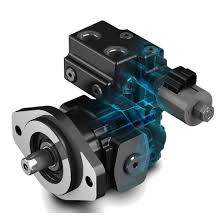
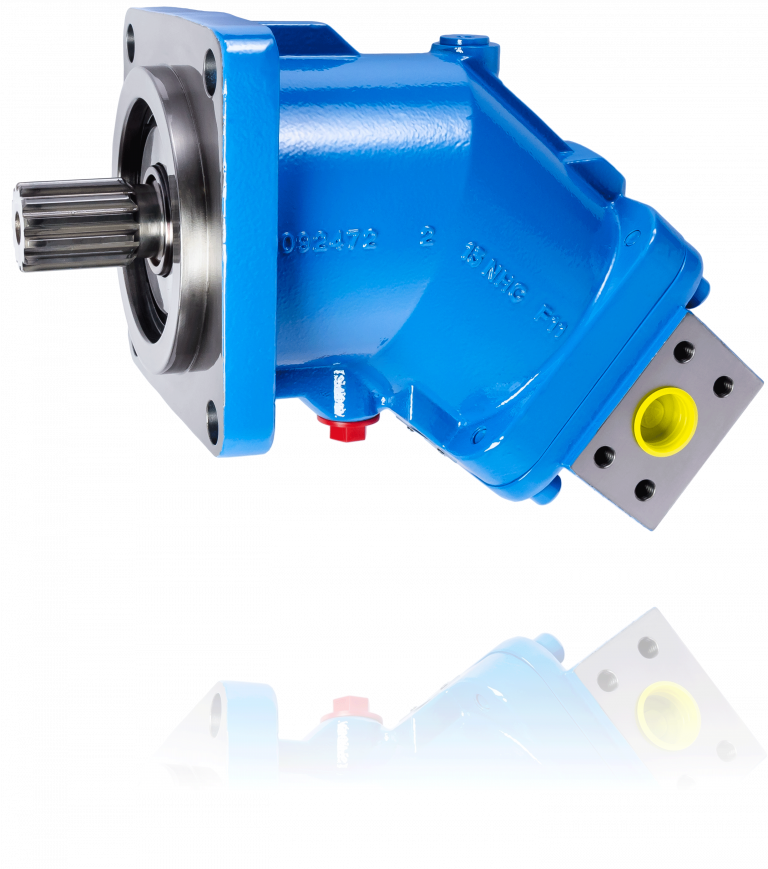
The Casappa HDD30.51 hydraulic flow divider and gear flow distributor valve is a robust hydraulic component designed for precise flow division and synchronization in demanding fluid power systems.Positioned within the MAGNUM series of gear flow dividers,this unit provides reliable hydraulic flow split performance,making it ideal for systems where multiple actuators must run in close coordination.As a precision device that enables equal or proportional hydraulic flow distribution,it is frequently employed where consistent motion synchronization and predictable actuator behavior are critical.
Product Description:Precision Flow Control for Complex Hydraulic Systems
The Casappa HDD30.51 is engineered as a gear flow divider with cast iron construction that ensures durability under high-pressure industrial conditions.Its role is to split incoming hydraulic fluid into multiple output streams with minimal deviation,enabling synchronized movement of hydraulic cylinders or motors.This performance characteristic is vital when two or more actuators must operate at the same speed and with consistent force distribution without complex feedback control.
The device supports a displacement rating around 51 cm³per revolution,making it suitable for moderate to high-flow circuits.Its internal gear mechanism ensures that flow division remains consistent even when system pressure varies,reducing the risk of uneven movement or operational lag between linked actuators.The modular design of the gear sections also allows cascading or linking of multiple units for complex multi-section systems.
Key Functional Features and Capabilities
Hydraulic Flow Divider and Synchronous Function
The core function of the HDD30.51 is to act as a hydraulic flow divider,distributing an incoming flow into equal or specified proportional outputs.This capability is essential in systems where synchronized actuator movement is required—for example,in lift platforms,multi-cylinder presses,or gantry systems where each cylinder needs matching flow to maintain uniform motion.The gear-type mechanism offers positive displacement behavior,which significantly improves flow tracking performance under varying loads.
Robust Construction and System Integration
Built with cast iron housing,this flow distributor valve is designed to withstand high operational pressures and harsh industrial environments.The durable body material ensures long service life in continuously operating systems.Typical max pressures in the MAGNUM series reach up to approximately 320 bar,supporting heavy-duty applications.
Modularity and Expandability
The modular nature of the HDD line allows integration of units with different displacement capacities or cascading multiple sections together.This flexibility means that engineers can scale fluid distribution complexity while preserving the synchronizing characteristics.Such modularity can simplify system architecture while enabling growth or future upgrades.
Technical and Performance Attributes
While specific performance can vary with configuration,most units in the HDD30 series share common traits that influence system design decisions:
Positive Displacement Flow Control:Gear-based distribution provides predictable and repeatable split flows,beneficial for precise motion synchronization without active control loops.
High Pressure Capability:With peak pressures up to~320 bar,the unit can integrate into high-force hydraulic circuits.
Versatile Flow Range:Displacement at around 51 cm³/rev positions this model for moderate flow demands while retaining suitability for both industrial and mobile hydraulic systems.
Applications and Industry Use Cases
The versatility and precision of the HDD30.51 make it applicable across a wide variety of hydraulic systems:
Industrial Automation:Hydraulic presses,clamping systems,and synchronized cylinder arrays use flow dividers to maintain equal motion across parallel actuators.
Mobile Machinery:Construction and agricultural equipment often require multi-actuator coordination,such as boom lifts or spreader arms.
Material Handling Equipment:Platforms and lifts that must raise and lower uniformly benefit from precise flow division to avoid tilting or uneven movement.
In these environments,the ability of a gear flow distributor like the HDD30.51 to maintain synchronous actuator speed directly contributes to system reliability,operator safety,and load consistency.
Advantages for System Designers and Engineering Teams
Reliable Synchronization
Compared with simple hydraulic circuits without flow regulation,the HDD30.51 ensures more predictable actuator performance,reducing the need for complex servo valves or electronic feedback systems when basic synchronization is acceptable.This can significantly lower both implementation cost and system complexity.
Mechanical Simplicity
The gear-based design requires minimal adjustment and provides stable performance over a wide range of operating conditions.Because the division ratio is inherent to the gear geometry,there is no need for active controls or frequent recalibration,which can be an advantage in systems where service accessibility is limited.
Enhanced System Safety
By splitting flow mechanically rather than relying on pressure compensation alone,the HDD30.51 can reduce the risk of unexpected actuator drift or speed mismatch,improving operator confidence and system safety.This is particularly useful in safety-critical applications such as lifting equipment or load-bearing machinery.
Extending Your Understanding:Gear Flow Distributor Valves Explained
Beyond the specific model,understanding the general category of gear flow distributor valves helps engineers design better hydraulic circuits.These devices are fundamentally mechanical solutions for flow division and combination.Instead of using electronic feedback or servo control,they rely on the precise volumetric behavior of interlocking gears to deliver consistent split flows.
In typical hydraulic systems,unregulated parallel actuators can experience unequal speeds when loads differ.A flow divider,such as the HDD30.51,evenly apportions the pump output,ensuring that both actuators receive the same flow rate,which is crucial in synchronized lifting or paired cylinder movements.This mechanical division can also act as a flow combiner,allowing separate actuator circuits to feed a common return or load.
These devices are preferred when:
System simplicity and robustness are prioritized.
Predictable,fixed flow division is acceptable without dynamic adjustment.
Electronic control cost and complexity need to be minimized.
Frequently Asked Questions(Potential Customer Interests)
1.What is the difference between a flow divider and a proportional flow control valve?
A flow divider such as the Casappa HDD30.51 is designed to mechanically split the total hydraulic flow into fixed portions using gears,ensuring that each actuator linked to the unit receives consistent flow regardless of pressure fluctuations.In contrast,a proportional flow control valve adjusts flow dynamically based on pilot signals or controller input,enabling variable flow settings.Flow dividers typically offer greater simplicity and reliability for fixed-ratio synchronization but do not allow adjustable flow ratios without hardware changes,whereas proportional valves give flexible flow tuning at the cost of increased system complexity.
2.Can the HDD30.51 unit be used with multiple actuator sections in a cascading configuration?
Yes.One advantage of gear flow dividers like this model is the ability to cascade multiple sections together to cover more than two actuators.By linking individual modules with matching or different displacement sections,engineers can extend the distribution network while preserving the synchronization characteristics.However,design attention must be paid to overall pressure drop and porting strategy,as each added section introduces additional internal resistance that affects system efficiency.
3.What kind of hydraulic fluids can be used with this type of flow divider?
These units are compatible with standard mineral-based hydraulic oils typically used in industrial and mobile machinery systems.Compatibility with water-glycol or fire-resistant fluids depends on the seal materials and the system’s specific design but is commonly supported in many industrial applications.Always refer to manufacturer documentation to confirm fluid compatibility and maintain proper filtration to avoid contamination that can accelerate gear wear.
4.How does flow divider accuracy impact system performance?
Accuracy in a gear flow distributor refers to how closely the actual split flow matches the intended ratio.High accuracy(often within a few percent)ensures that paired actuators move at nearly identical speeds,critical in synchronized motion applications.Lower accuracy can result in slight speed differences,which in turn may lead to uneven motion or added mechanical stress in multi-actuator systems.Regular inspection and clean fluid conditions help preserve accuracy over the service life.
5.Are there maintenance considerations specific to gear-based flow dividers?
Gear flow dividers generally require less maintenance than electronic or servo-controlled alternatives,but proper care is still essential.Key considerations include ensuring clean fluid to prevent abrasive wear of the gears,monitoring for unusual noise or vibration that may indicate internal wear,and following manufacturer recommended service intervals.Periodic inspection of seals and mounting connections also helps maintain reliable operation over extended use.
No.26, District 4, Maquanying Liyuan Community, Xiangjiang North Road, Cuigezhuang, Chaoyang District, Beijing.
+86 18221112592
https://www.hydraulic-supply-company.com