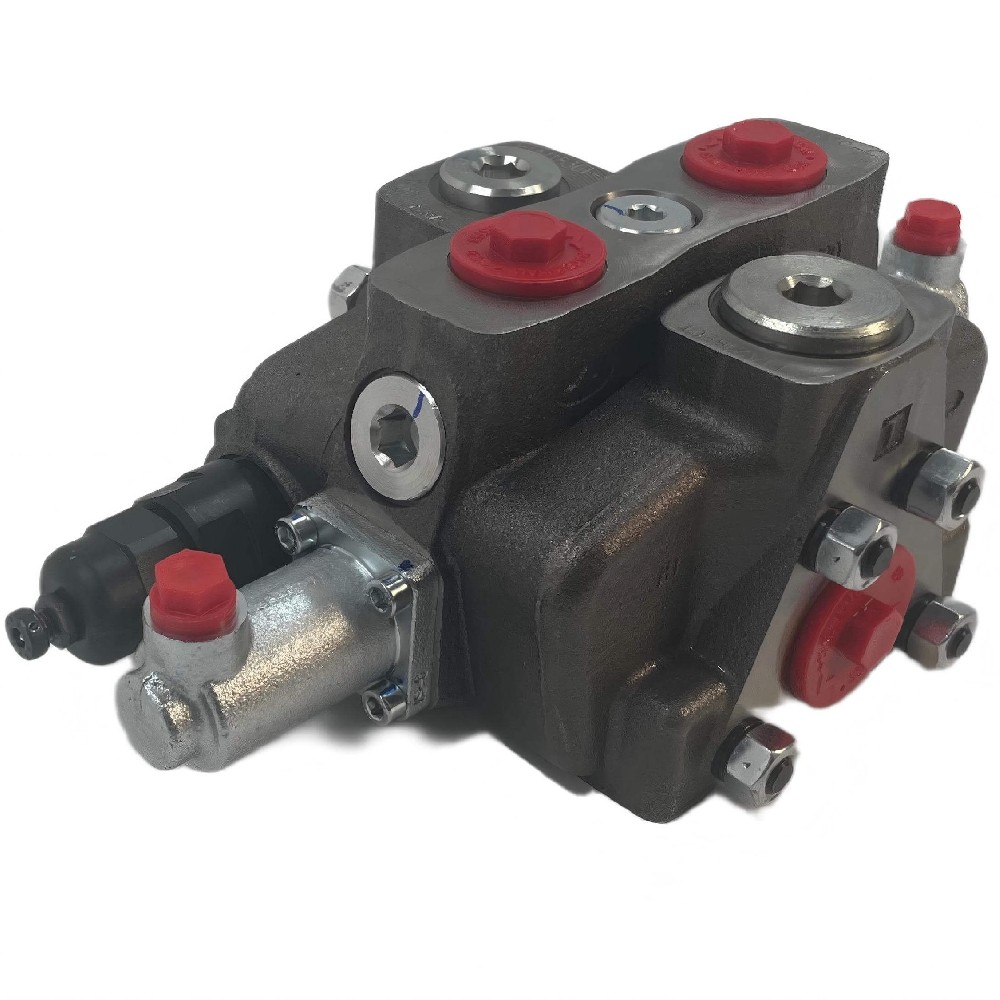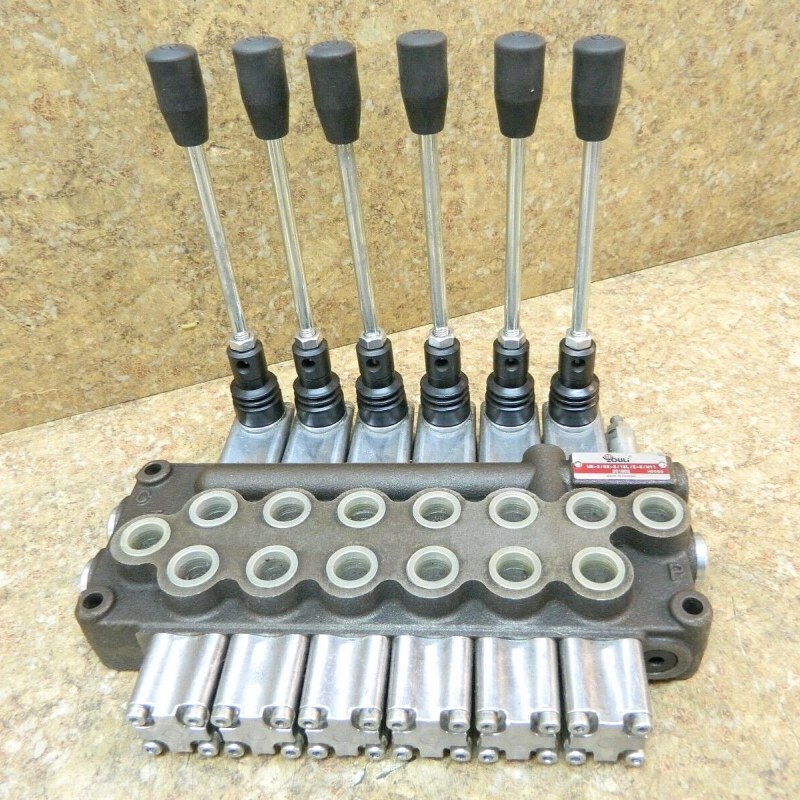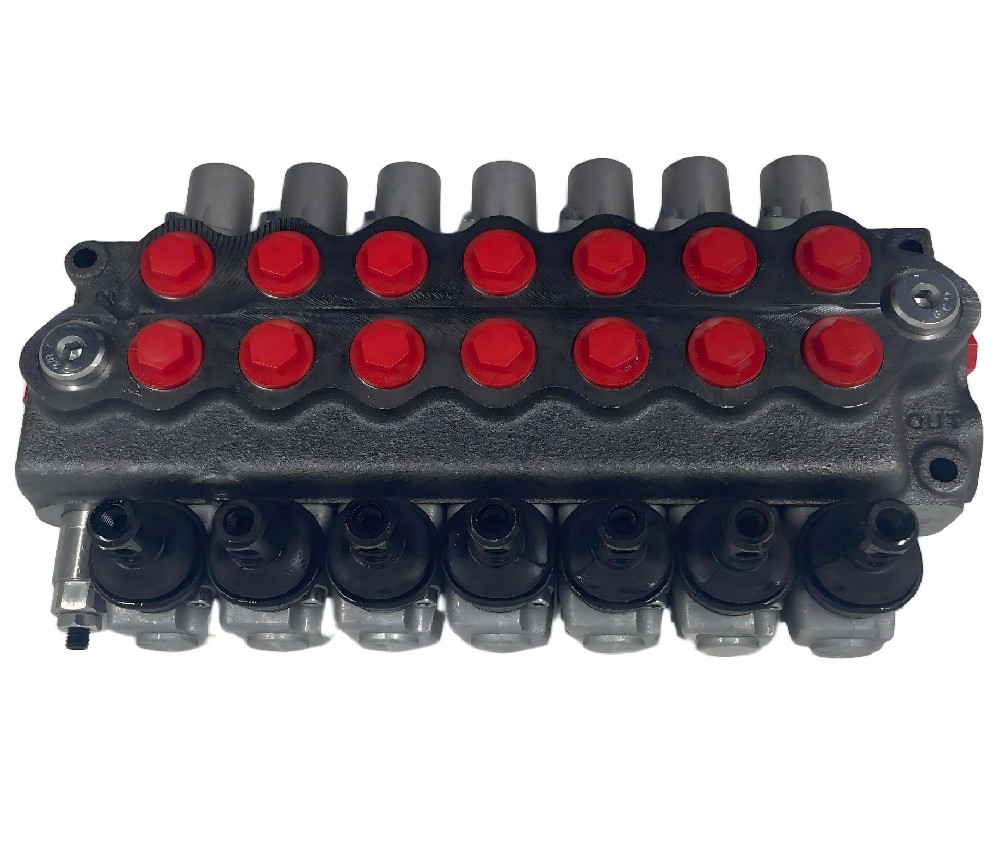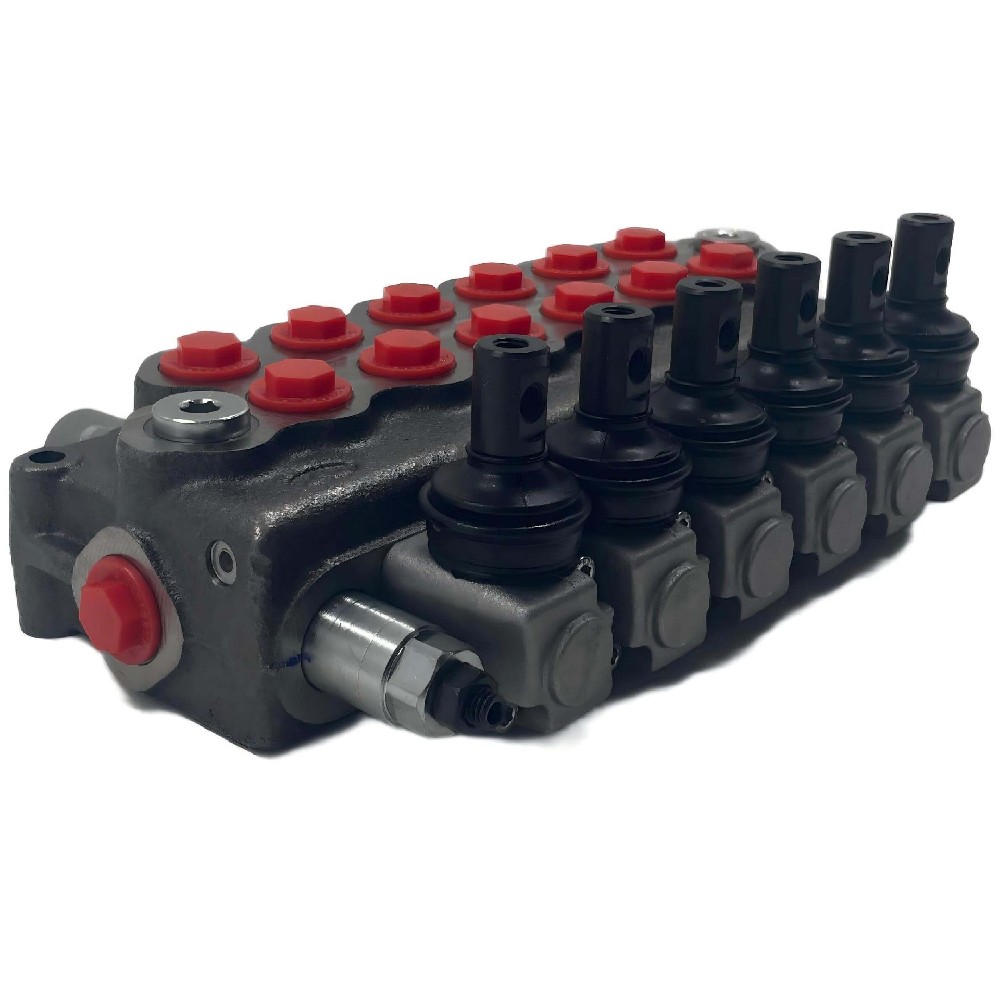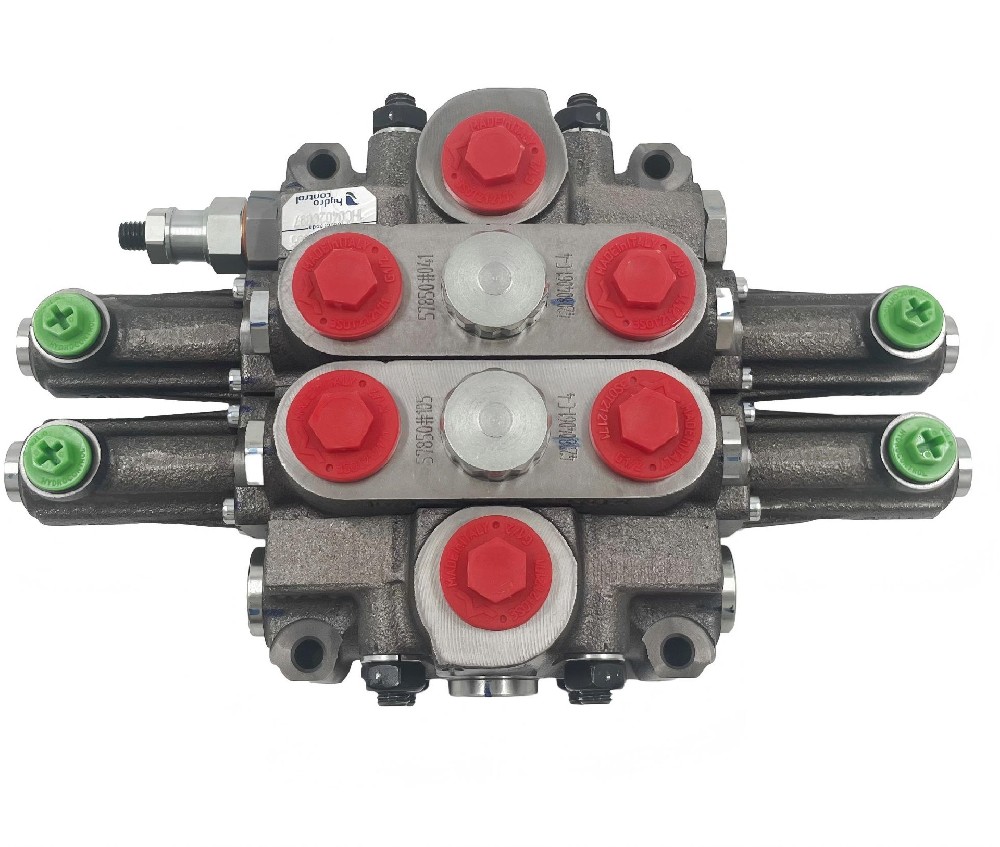
The Hydrocontrol HC-D4/2-IL009-160 is a robust directional control valve engineered for demanding mobile and industrial applications.As part of a comprehensive line of hydraulic manifold valves,this manually operated unit delivers reliable fluid power management in high-pressure,high-flow systems where operator control is essential.
Controlling High Energy:The Role of a Dedicated Directional Valve
In the world of fluid power,not all valves are created equal.When a system demands the redirection of high-energy fluid—measured in tens of megapascals and dozens of liters per minute—the component placed between the pump and the actuator must be more than just a flow path.It must be a fortress of precision engineering,capable of withstanding relentless pressure spikes,abrupt directional changes,and the unforgiving conditions of mobile machinery.
The Hydrocontrol HC-D4/2-IL009-160 enters this arena as a specialized solution.It is a directional control valve designed specifically to manage significant hydraulic power with the simplicity and reliability of manual operation.Unlike complex proportional valves that require electronic feedback,this valve relies on a direct mechanical connection between the operator and the work.This philosophy is particularly valuable in applications like marine deck machinery or rescue equipment,where electronic failure is not an option.The valve acts as the critical interface,translating human intent into precise hydraulic action,all while housed within a rugged casting designed to outlast the machinery it controls.
Series Positioning:The High-Flow Commander
Within the Hydrocontrol portfolio,the HC-D4/2 series occupies a distinct niche:it is the high-flow commander for systems requiring substantial fluid delivery at elevated pressures.While other series may focus on ultra-fine metering at lower flows or stackable modularity for complex circuits,the HC-D4/2 is a monoblock valve optimized for single-function dominance or primary control in a two-function system.
The"D4/2"designation hints at its architecture—a robust body designed to handle the stresses of 80 L/min flow without significant internal pressure drop.This positions it ideally for equipment where a single,powerful actuator,such as a hydraulic motor on a rescue winch or the feed cylinder on a rock drill,requires authoritative control.The monoblock construction ensures that all that energy is contained within a single,leak-resistant iron mass,eliminating the potential failure points associated with sectional valves under high-flow stress.For system designers,it offers a compact,powerful building block that prioritizes flow capacity and mechanical robustness over multi-function complexity.
Technical Capabilities:Engineering the Flow Path
Understanding the HC-D4/2 requires looking beyond the surface specifications to appreciate how its design directly impacts machine performance,operator safety,and system longevity.Each engineering choice embedded in this directional control valve serves a specific operational purpose.
35 MPa Pressure Rating:The Measure of Reserve Strength
The 35 MPa(350 bar)continuous pressure rating is a statement of the valve's material integrity.It indicates that the casting and internal spools are designed to endure the repeated application of extreme force without yielding.
Engineering context:In a hydraulic rock drill,pressure is not steady;it fluctuates violently as the drill bit impacts rock.The HC-D4/2's rating ensures that when the drill meets a particularly hard seam and pressure spikes toward the relief valve setting,the valve body does not expand microscopically.Any expansion would increase internal clearances,leading to increased leakage and reduced efficiency.By maintaining its dimensional stability under pressure,this hydraulic manifold valve ensures that the spool maintains its precise fit,directing oil exactly where it needs to go with minimal internal slippage.
80 L/min Flow Capacity:Balancing Speed and Control
At 80 liters per minute,the HC-D4/2 enters the realm of high-speed actuation.This flow rate is sufficient to drive large-bore cylinders at productive speeds or rotate substantial hydraulic motors.
Engineering context:Flow capacity is a double-edged sword.High flow can mean fast cycle times,but it can also mean jerky,uncontrollable movement if the valve metering is not carefully designed.The HC-D4/2 addresses this through the geometry of its manual spools.The metering notches are precision-ground to provide progressive flow opening.When an operator on a road rescue vehicle needs to extend a cutting tool slowly to avoid pinching a victim,the spool design allows for fine control at the start of its travel.When full speed is needed to retract and reposition,the wide-open flow path minimizes restriction,maximizing actuator speed and conserving pump energy.
Asymmetric Port Sizing:G1/2"for P-A-B,G3/4"for T
The port configuration is a critical,often overlooked,detail.The pressure inlet(P)and work ports(A,B)are threaded G1/2",while the tank return port(T)is significantly larger at G3/4".
Engineering context:This asymmetry is intentional and reveals the engineer's understanding of hydraulic physics.Oil returning to the tank(T)is often mixed with air and operating at lower pressure,making it prone to turbulence.A larger G3/4"port reduces the velocity of this return oil as it exits the valve.Lower velocity means less backpressure,which in turn reduces the risk of cavitation and ensures that the valve's internal passages drain quickly and completely.This allows the spool to shift more freely on the next cycle.The G1/2"ports on the pressure side are sized to maintain high velocity,keeping entrained contaminants in suspension and preventing them from settling and causing wear.
The Manual Control Advantage in High-Stakes Environments
In an era pushing toward full automation,the selection of a manually operated directional control valve for certain applications remains a strategic decision based on safety,reliability,and total cost of ownership.
Fail-Safe Operation:In applications like marine steering or rescue tool operation,the control system must be invulnerable to electronic failure.The HC-D4/2's manual lever provides a direct,mechanical link.There is no software to crash,no solenoid to burn out,and no sensor to be fouled by salt spray or dust.
Inherent Proportional Control:While not a servo valve,a skilled operator can achieve remarkably fine proportional control with a manual spool.They can"feel"the load through the lever and make micro-adjustments.This tactile feedback is invaluable in scenarios like positioning a heavy load with a ship's crane or feathering the feed on a rock drill to prevent bit jamming.
Simplified Diagnostics:When a machine equipped with the HC-D4/2 develops a fault,the diagnosis is straightforward.Is the lever moving freely?Is the spool stuck?Is there pressure at the inlet?This simplicity dramatically reduces downtime in remote locations or emergency situations where waiting for a technician with a laptop is not feasible.
Comprehensive Technical Specifications
To facilitate accurate integration into hydraulic schematics,the key parameters of this hydraulic manifold valve are detailed below.
Pressure Capacity:The valve is rated for a continuous operating pressure of 35 MPa,with the structural integrity to withstand momentary pressure surges common in impact loading.
Flow Rating:Designed for efficient high-speed actuation,the nominal flow capacity is 80 L/min,ensuring minimal pressure drop during peak demand.
Port Thread Specifications:The primary pressure and work ports(P,A,B)utilize G1/2"BSPP threads.The tank return port(T)is sized at G3/4"BSPP to optimize low-pressure return flow and reduce backpressure.
Control Interface:Operation is via a robust mechanical manual lever,providing direct,tactile control independent of electrical power.
Core Function:As a directional control valve,it governs the start,stop,and direction of fluid flow to a hydraulic actuator.
Construction:The monoblock design integrates all fluid passages into a single,high-strength casting,minimizing external leak paths and maximizing resistance to mechanical stress.
Primary Application Landscapes
The performance envelope of the HC-D4/2 makes it particularly well-suited for applications where high flow,manual authority,and environmental resilience intersect.
Marine and Offshore Hydraulic Systems
On the deck of a workboat or fishing vessel,equipment must function reliably despite constant salt spray,motion,and vibration.The HC-D4/2 is ideal for controlling auxiliary functions such as net haulers,capstans,and small deck cranes.The absence of electronics eliminates a major corrosion and failure point.The large G3/4"tank port is particularly beneficial here,as it ensures that return oil from a winch motor is not restricted,preventing the buildup of backpressure that could overheat the system during prolonged use.
Hydraulic Rock Drilling Rigs
Rock drills are among the most punishing applications for hydraulic components.They subject valves to continuous pressure oscillation and high-frequency shock loads.The HC-D4/2,functioning as a feed control valve,allows the driller to manually regulate the thrust of the drill string against the rock face.The 80 L/min flow provides the speed needed for rapid retraction,while the precision metering notches allow the operator to reduce feed pressure the moment the drill torque spikes,preventing the bit from binding and stalling the motor.
Road Rescue and Emergency Vehicles
In rescue trucks and cutters,time is critical,but control is paramount.The HC-D4/2 powers tools like spreaders and cutters.The manual control gives the operator instantaneous,proportional command over the tool's jaws.They can feel the resistance of the metal they are cutting and adjust force and speed accordingly.The valve's high-flow capacity ensures that the tool cycles quickly,while its robust construction guarantees it will function on the first try,every time,even if the vehicle has been sitting idle for weeks.
System Integration:Placing the Valve in the Circuit
Integrating the HC-D4/2 into a hydraulic system requires attention to the complete power train.It is typically installed downstream of a fixed or variable displacement pump,with a pressure relief valve set at or below 35 MPa protecting the circuit.
The G1/2"and G3/4"BSPP ports are industry standards,allowing for straightforward connection using readily available adapters to JIC,NPT,or metric hose ends.When designing the tank line,it is critical to maintain the benefit of the large G3/4"port by using adequately sized return hoses and filters.Restricting the return line negates the valve's design advantage and can lead to excessive heat buildup.
From a maintenance standpoint,the monoblock design simplifies service.There are no inter-section seals to replace.If spool wear occurs over an extended period,it can be accessed by removing the manual lever mechanism.However,the best maintenance practice is preventive:maintaining hydraulic fluid cleanliness to ISO 4406 standards to prevent the abrasive contaminants that cause spool and bore wear.
Professional Selection Guidance
Selecting the correct directional control valve is essential for machine performance,efficiency,and safety.
The HC-D4/2 is the ideal choice when:
The system requires handling flow rates in the 80 L/min range.
Operating pressure consistently approaches or reaches 35 MPa.
Direct,tactile operator control is required,and electronic automation is either unnecessary or undesirable.
The application involves a single,high-power actuator or primary control in a two-function system.
The operating environment is harsh,involving moisture,dust,or vibration.
This specific valve is not the optimal fit for:
Low-flow systems(below 20 L/min)where smaller,more cost-effective valves would suffice.
Applications requiring complex multi-function control in a single valve bank.
Systems demanding remote solenoid operation or integration with PLC-based automation.
Circuits where space is extremely limited and a compact,low-flow valve is required.
For engineers designing systems that demand the flow and pressure capabilities of the HC-D4/2,this valve represents a benchmark in manual,high-energy fluid control.
Frequently Asked Questions(FAQ)
Q:What does the"D4/2"designation indicate in the model number?
A:While specific coding can vary by manufacturer,the"D4"typically refers to the valve size or series,indicating its flow and pressure capacity(in this case,the 80 L/min,35 MPa rating).The"/2"commonly denotes the number of positions the spool can occupy,such as a two-position valve for extending and retracting a cylinder,or a three-position valve with a central bypass or closed configuration.The full model string includes specific options for spool type,seals,and actuation mechanisms.
Q:Why is the tank port(T)larger than the pressure and work ports?
A:This is a deliberate engineering design to manage return flow efficiently.Return oil is often aerated,cooler,and at lower pressure,making it more prone to turbulence.The larger G3/4"port reduces the velocity of the oil as it exits the valve,minimizing backpressure and ensuring the valve cavity drains quickly.This allows the spool to shift more freely and reduces the risk of cavitation or heat generation in the return line.
Q:Can this valve be used with a double-acting hydraulic cylinder?
A:Absolutely.As a four-port,three-way(or four-way)directional control valve,the HC-D4/2 is specifically designed to control double-acting cylinders and bi-directional motors.Port A connects to one side of the cylinder,and Port B to the other.Shifting the manual lever directs flow to either A or B,while simultaneously opening the opposite port to tank return.
Q:What kind of hydraulic fluid is recommended for this valve?
A:The HC-D4/2 is compatible with standard mineral-based hydraulic oils.For optimal performance and longevity,the fluid viscosity should be maintained within the recommended range for the ambient temperature(typically ISO VG 32,46,or 68).Most importantly,the fluid must be kept clean.Using a return-line filter with a beta rating of at least 75(β10≥75)is highly recommended to protect the precision-fit spools from contaminant wear.
Q:How do I convert the G-threaded ports to connect my NPT hoses?
A:G-threads(BSPP)are parallel threads that seal via a captive O-ring or a soft metal washer on the face of the port.To connect hoses with NPT(tapered)fittings,you will need a hydraulic adapter.One end of the adapter will have the correct G-thread to match the valve port,and the other end will have the required NPT thread.These adapters are standard components and readily available from hydraulic supply houses.It is good practice to apply a small amount of thread sealant to the NPT side only,ensuring it does not enter the hydraulic system.
No.26, District 4, Maquanying Liyuan Community, Xiangjiang North Road, Cuigezhuang, Chaoyang District, Beijing.
+86 18221112592
https://www.hydraulic-supply-company.com