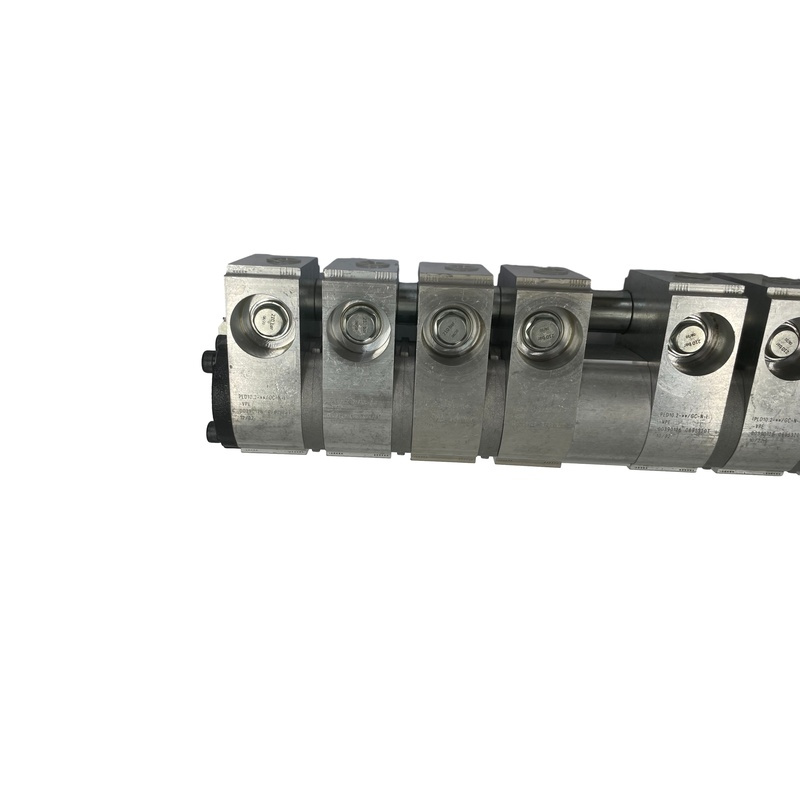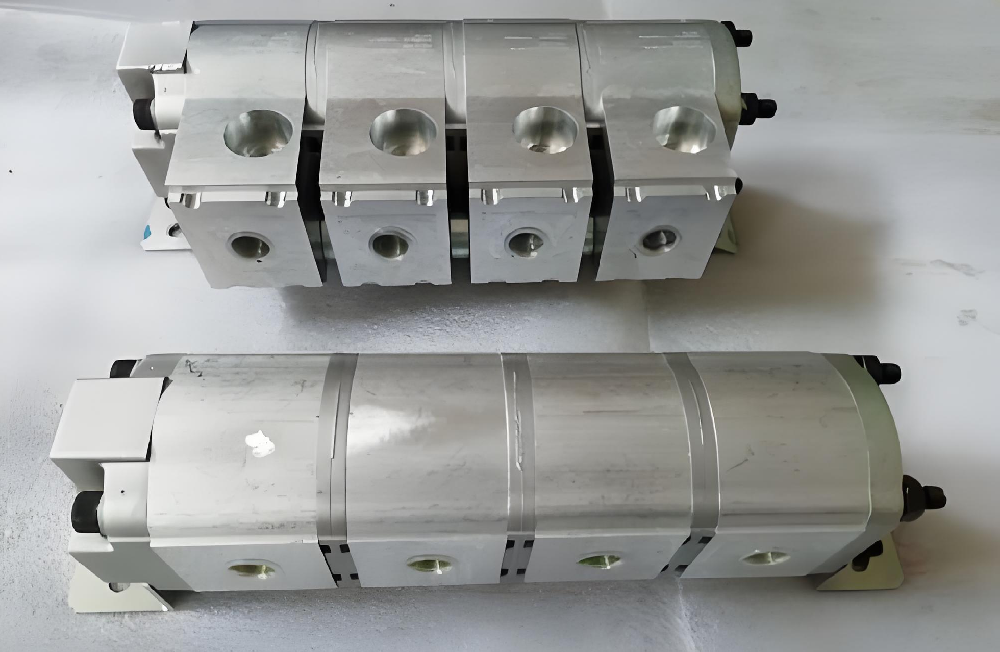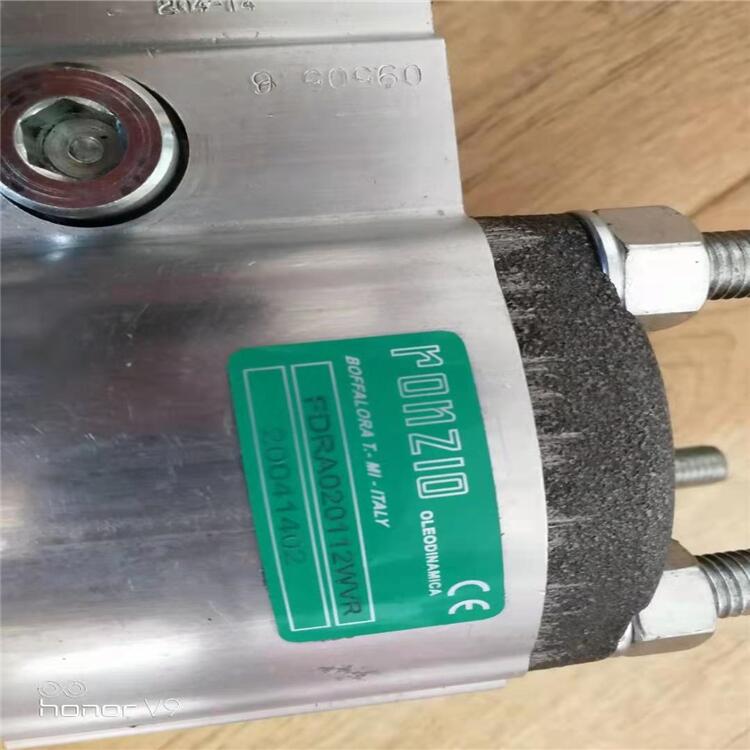
The RONZIO FDRA020804WVR stands as a premier example of Italian engineering in the field of hydraulic synchronization.This device is a high-performance Hydraulic Flow Divider,specifically designed as a gear-type Hydraulic Synchronizing Motor.Its core purpose is to accurately split a single incoming hydraulic flow into multiple,equal or precisely proportional outgoing streams,enabling the synchronous movement of two or more hydraulic cylinders or motors with exceptional reliability and without the need for complex electronic controls.Manufactured by the esteemed Italian company RONZIO,a specialist in gear pumps and motors with a history dating back to 1950,the FDRA020804WVR embodies decades of refinement in precision manufacturing and hydraulic system design.This unit is engineered for industrial applications where mechanical precision,robustness under high pressure,and consistent performance are non-negotiable.
Core Function and Principle of Operation
A Hydraulic Synchronizing Motor like the FDRA020804WVR operates on a simple yet ingenious mechanical principle.It consists of multiple,identical gear motor sections(or"lifts")mechanically linked together on a common shaft within a single housing.When pressurized hydraulic oil enters the unit,it drives these individual gear sets.Because they are mechanically coupled and manufactured to extremely tight tolerances,each section is forced to rotate at precisely the same speed.
Since each motor section has an identical geometric displacement(the fixed volume of oil it moves per revolution),this equal rotational speed directly translates into equal volumetric output flows from each outlet port.Any attempt by one actuator to move faster than another creates a pressure difference,which the gear coupling inherently resists.This mechanical lock-step operation ensures that connected cylinders extend or retract in near-perfect unison,making it an exceptionally reliable Hydraulic Flow Divider for synchronization tasks.
Technical Specifications and Design Characteristics of the FDRA020804WVR
The FDRA020804WVR is a four-section(4-lift)synchronizing motor.Its key performance parameters are defined by its precision gear design and robust construction.Each individual motor section has a dedicated displacement of 78.7 milliliters per revolution(ml/r).This displacement is the fundamental factor determining its flow-handling capacity.The operational flow range for each section is notable,spanning from a low of 50 liters per minute(L/min)up to a high of 1350 L/min,with a specific"high noise"threshold noted at 142 L/min.
Built for demanding environments,it features a durable cast-iron housing and hardened steel gears,ensuring longevity.The unit is rated for a continuous working pressure of 230 bar,with the capability to withstand peak pressures up to 250 bar.A critical integrated feature on this model is the built-in pressure relief(overflow)valve,which protects the motor and the downstream circuit from potential pressure spikes that can occur during synchronization,especially at the end of a cylinder stroke.
For installation,it employs threaded port connections for easy integration into existing hydraulic lines.The main inlet and outlet ports are sized at G1½",while the case drain(leakage)port is G¾".This specific configuration indicates its suitability for systems with substantial flow requirements,such as those found in large material handling or industrial manufacturing equipment.
Key Features and Advantages for System Design
The RONZIO FDRA020804WVR offers several compelling advantages that make it a preferred choice for engineers.
Mechanical Simplicity and Reliability:Unlike electronic synchronization systems that rely on sensors,controllers,and servo valves,this synchronizing motor provides synchronization purely through mechanical means.This results in a highly reliable,maintenance-friendly system that is inherently resistant to electrical interference and requires no complex programming.
High Precision and Pressure Capability:Utilizing RONZIO's advanced gear technology,potentially including their specialized double-arc sine curve gear tooth profile designed for smooth meshing,low wear,and high efficiency,the unit delivers excellent synchronization accuracy.Its high-pressure rating makes it suitable for powerful industrial applications.
Modular Robustness:The use of a cast-iron body for this displacement size signifies a design focused on structural integrity and durability under continuous high load,distinguishing it from smaller,aluminum-bodied units used for lower-flow applications.
Primary Industrial Applications
This type of Hydraulic Flow Divider is indispensable in machinery where the coordinated motion of multiple points is critical to function,safety,and product quality.
Material Handling and Lifting:Synchronizing the lifting arms on platform lifts,forklift attachments,or the twin hoists of a gantry crane to ensure perfectly level lifting and prevent structural binding.
Machine Tools and Presses:Controlling the parallel movement of large press platens or clamping mechanisms to ensure even force distribution and precise alignment,which is crucial for part quality and tooling life.
Construction and Agricultural Equipment:Managing the leveling action of concrete spreaders,the synchronous extension of stabilizer legs on cranes,or the positioning arms on complex harvesting equipment.
Plastic and Metal Processing:Operating multiple injection molding machine clamp cylinders simultaneously or synchronizing the rollers in a leveling or bending machine.
Selection,Integration,and Maintenance Guidelines
Selecting the correct FDRA020804WVR involves matching its specifications to the system's needs.The 4-lift design is ideal for controlling four actuators or for creating two pairs of synchronized movements.The key is to ensure the required flow per actuator falls within the motor's recommended flow range(50-1350 L/min per section in this case)and that the system pressure remains at or below its 230 bar continuous rating.
Integration requires proper hydraulic filtration upstream to protect the precision gears from contamination.The case drain port must be independently piped back to the reservoir with minimal backpressure to ensure proper lubrication and cooling of the internal gears.For applications where actuators may experience uneven loads,the integrated relief valve is essential to allow for pressure equalization and prevent motor damage.
Maintenance is straightforward,primarily involving regular monitoring of the hydraulic fluid's cleanliness and temperature.Periodically checking for external leaks and ensuring mounting bolts are tight are standard practices.The mechanical nature of the unit means there are no electronic components to fail,contributing to its long service life and low total cost of ownership.
Comparative Perspective:Mechanical vs.Electronic Synchronization
The choice between a mechanical Hydraulic Synchronizing Motor like the FDRA020804WVR and an electronic motion control system is a fundamental design decision.Mechanical synchronizers offer superior reliability,lower initial and maintenance costs,and simpler troubleshooting.They excel in harsh environments and are ideal for applications where"good"synchronization(typically within±1.5%to±2.5%depending on model and conditions)is sufficient.
Electronic systems,using servo or proportional valves guided by position sensors and a PLC,offer ultimate flexibility and pinpoint accuracy.They can easily compensate for differential loads,perform complex motion profiles,and re-synchronize on-the-fly.However,this comes with significantly higher complexity,cost,and a greater number of potential failure points.The RONZIO FDRA020804WVR represents the optimal solution where robust,set-and-forget mechanical synchronization meets the application's performance requirements.
No.26, District 4, Maquanying Liyuan Community, Xiangjiang North Road, Cuigezhuang, Chaoyang District, Beijing.
+86 18221112592
https://www.hydraulic-supply-company.com